Key Takeaways:
- Dry hair suffers from a lack of internal moisture and natural lipids, whereas frizzy hair is an external reaction to atmospheric moisture entering a raised cuticle.
- Dry hair is characterized by a rough, brittle, and matte texture that remains unchanged in the weather, while frizzy hair is defined by strands that instantly swell, poof, and lose definition in humidity.
- Restore dry hair with lipid-replenishing formulas like the Hydrate collection, and defend frizz-prone hair with cuticle-smoothing, humidity-blocking systems like the Smooth Gloss collection.
What Is Dry Hair vs. Frizzy Hair?
To choose the right treatment, you must first understand what is happening beneath the surface of your strands. While dry hair and frizzy hair often occur together, they are triggered by entirely different environmental and structural factors.
- Dry hair signifies a critical lack of internal moisture and natural lipids. When your scalp does not produce enough natural oils, or when heat styling and coloring strip those oils away, your hair loses its elasticity. It feels rough, looks matte, and becomes brittle.
- Frizzy hair is your hair’s external reaction to atmospheric moisture. When the hair’s outermost protective layer—the cuticle—is raised or damaged, moisture from the air penetrates the hair shaft. This causes the individual fibers to swell, bend, and expand outward into frizz.
Dry Hair vs Frizzy Hair: Know the Difference
To give your hair the precise care it deserves, you must first identify its primary concern. Use this breakdown to determine whether your strands require deep moisture replenishment or advanced cuticle smoothing:
The Characteristics of Dry Hair
Dry hair is fundamentally a hydration deficit inside the hair shaft. Look for these key indicators:
- Straw-Like Texture: Strands feel rough, stiff, and parched from root to tip.
- Dull, Matte Appearance: The hair lacks a healthy, light-reflecting shine because the depleted hair shaft cannot reflect light evenly.
- Compromised Elasticity: Strands snap easily when stretched or brushed, leading to increased breakage.
- Weather Resistance: Unlike frizzy hair, dry hair remains relatively unchanged in shape when exposed to high humidity—it simply remains dry and stiff.
The Characteristics of Frizzy Hair
Frizzy hair is a structural reaction to external moisture. Look for these key indicators:
- Instant Expansion: Strands poof, swell, and expand into an unruly halo the moment you step into humid or damp air.
- Wire-Like Texture: Individual strands feel rough, uneven, or crinkled, even if the hair feels soft immediately after washing.
- Flyaways and Static: Fine hairs stand up away from the head and resist lying flat.
- Loss of Definition: Natural wave or curl patterns lose their cohesive shape, turning into a fuzzy, undefined texture.
| Feature | Dry Hair | Frizzy Hair |
|---|---|---|
| Primary Cause | Lack of internal moisture, natural oils, and sebum. | Raised, open cuticles absorbing atmospheric humidity. |
| How It Feels | Straw-like, rough, stiff, and brittle to the touch. | Wire-like, fuzzy, or texturized, even if the hair is soft underneath. |
| How It Looks | Dull, matte, lacking shine, with split ends. | Poofed, expanded, flyaway, and lacking definition |
| Weather Reaction | Stays relatively the same regardless of humidity. | Expands and poofs instantly when exposed to moisture or humidity. |
| Primary Solution | Deep moisture replenishment and lipid restoration. | Cuticle smoothing, sealing, and humidity barriers. |
Ingredients for Hydration & Smoothness
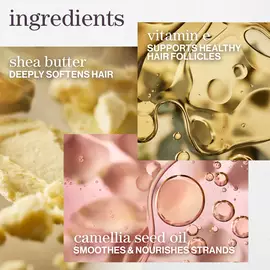
Pureology combines nature and science for targeted hair solutions. Here’s how our products address dry and frizzy hair:
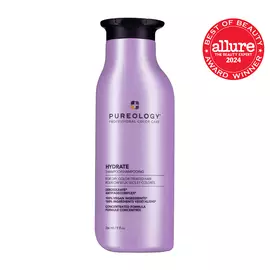
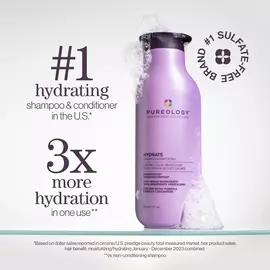
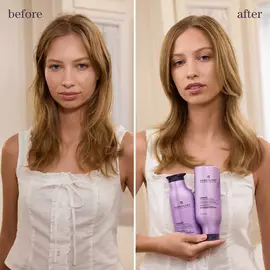
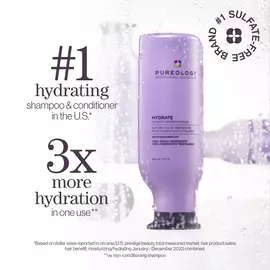
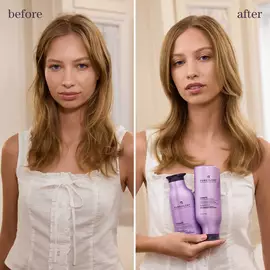
For Dry Hair - The Hydrate Collection: The Hydrate collection intensely moisturizes parched strands without weighing down color.
- Rose extract: Hydrates and softens hair.
- Green tea extract: Antioxidant, protects from environmental damage.
- Multi-wheat proteins: Strengthen hair fiber, improve elasticity.
For Frizzy Hair - The Smooth Gloss Collection: The Smooth Gloss collection transforms frizz into sleek, shiny hair. It creates a smooth, polished surface that repels humidity.
- Alanine: Helps repel excess moisture
- Serine: Helps attract & retain moisture
- Glycine: Helps create a smooth, even surface
How to Care for Dry Hair
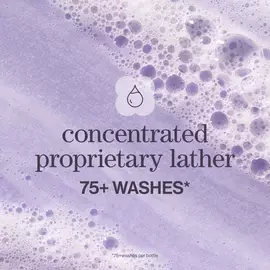
When treating dry, color-treated hair, your primary goal is to replenish lost lipids and inject deep, lasting moisture back into the hair fiber. Because Pureology formulas are highly concentrated, you only need a dime-sized amount of each product to achieve professional results.
- Wash with a Gentle, Sulfate-Free System: Traditional shampoos can strip away the natural oils your dry hair desperately needs. Cleanse with Hydrate Shampoo. Massage a dime-sized amount into wet hair to create a rich lather. Its ZeroSulfate® formula gently cleanses without stripping color or moisture. This sulfate-free shampoo helps replenish moisture, smooth rough texture, and protect against dryness caused by coloring, bleaching, and heat styling.
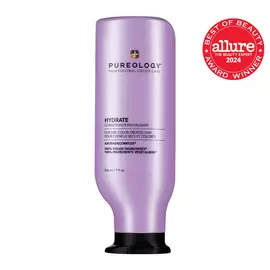
- Infuse Deep Moisture Daily: Follow with Hydrate Conditioner. Apply a dime-sized amount from the mid-lengths to the ends. Let the ultra-creamy, mint-infused formula sit for 1 to 2 minutes to soften parched strands and seal in vibrant color before rinsing with cool water. Hydrate Conditioner is an ultra-creamy treatment specifically engineered to shield dry strands against damage while sealing in vibrant color.
- Avoid Hot Water: Washing your hair with hot water strips away the precious natural oils that keep your scalp and strands hydrated. Stick to lukewarm water to keep the hair fiber comfortable and protected.
How to Care for Frizzy Hair
Caring for frizzy hair requires a strategy focused on smoothing the outer cuticle layer and creating an invisible shield to block out atmospheric humidity.
- Smooth the Cuticle Weekly: Swap your daily conditioner once or twice a week for the Smooth Gloss Treatment Mask. After shampooing, apply a generous amount from mid-lengths to ends, leaving it on for 5 to 10 minutes. This luxurious, creamy mask treatment glides effortlessly onto hair, leaving strands instantly smooth and conditioned.
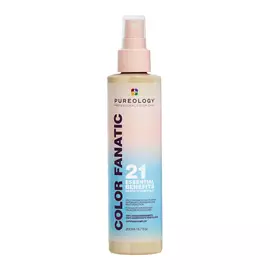
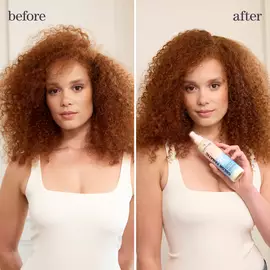
- Apply a Heat-Activated Shield: Before blow-drying, shake Smooth Gloss Silkmorphose™ Spray well, unlock the nozzle, and mist evenly through damp hair. This heat-activated, frizz-defying leave-in mist reduces frizz with each use and instantly magnifies hair gloss for frizz-prone, color-treated hair.
- Dry Gently: Rubbing your hair dry with a traditional terry cloth towel roughs up the cuticle, instantly triggering frizz. Instead, gently squeeze excess water out using a microfiber towel or a soft cotton t-shirt.
Beautiful hair begins with precise, targeted care. By recognizing whether your strands crave deep, thirst-quenching hydration or advanced, humidity-defying smoothness, you can restore balance and fluid movement to your natural texture.
FREQUENTLY ASKED QUESTIONS
Can humidity cause frizz even if my hair isn't dry?
Yes. While dry hair is more susceptible, any hair type can experience frizz in high humidity. The hair cuticle absorbs moisture from the air, causing it to swell and appear frizzy. Using products like the Smooth Gloss collection helps to seal the cuticle and repel humidity.
Does heat styling worsen dry or frizzy hair?
Excessive heat without protection can significantly worsen both dryness and frizz. Heat can strip moisture and further lift the cuticle. Always use a heat protectant like Pureology Smooth Gloss Silkmorphose™ Spray before any heat styling to shield your strands.
Can hair be both dry and frizzy?
Yes. In fact, dry hair is highly prone to frizz. Because dry hair lacks internal moisture, its cuticle layer naturally lifts to search for moisture in the air, which causes the hair to swell and frizz.
Why does color-treated hair get so dry?
The chemical process of coloring or bleaching lifts the hair's protective outer cuticle to deposit pigment. If not properly cared for with sulfate-free, hydrating products, this raised cuticle allows essential moisture to escape.
How often should I use the Smooth Gloss Treatment Mask
For optimal frizz control, we recommend using the Smooth Gloss Treatment Mask 1 to 2 times per week in place of your daily conditioner.