Ready to discover your hair type and create a personalized haircare routine that works best for you?
Understanding your hair type is the key to creating a personalized haircare routine that meets your hair's unique needs. Choosing the right products and techniques will help you achieve your healthiest, happiest hair yet.
Hair Type 101: The Basics
Before we get into defining your strands, we'll go over some key factors that can help in understanding different hair types:
- Hair Texture: The thickness or diameter of individual hair strands
- Hair Density: The number of hair strands on your scalp
- Hair Porosity: Your hair's ability to absorb and retain moisture
Now let’s get into the finer details of each key factor.
Hair Texture
- Fine Hair: Feels thin and delicate; often prone to breakage
- Medium Hair: Falls somewhere in between fine and thick (AKA the Goldilocks of hair textures)
- Thick Hair: Feels coarse and strong; can be resistant to styling
Hair Density: Counting the Hairs (Not Really!)
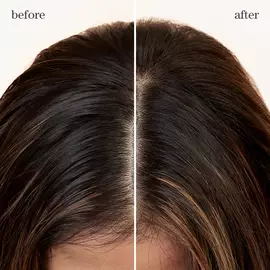
- Low Density: You can easily see your scalp through your hair
- Medium Density: Your scalp is partially visible
- High Density: Your scalp is barely visible
Hair Porosity: The Moisture Factor
- Low Porosity: Hair resists moisture; products tend to sit on top rather than absorbing
- Medium Porosity: Hair absorbs and retains moisture well
- High Porosity: Hair absorbs moisture quickly but loses it just as fast
How to Determine Your Hair Type
Now that you know the key factors and what to look for, let’s conduct a few tests to see where your hair falls within each category.
The Strand Test
Take a single strand of hair and compare it to a piece of sewing thread. If it's thinner, you have fine hair. If it's about the same thickness, you have medium hair. If it's thicker, you have thick hair.
The Scalp Test
Look in the mirror and part your hair. How much of your scalp can you see? This will help you determine your hair density.
The Float Test
Drop a few strands of clean hair into a glass of water. If they float, you have low porosity hair. If they sink slowly, you have medium porosity hair. If they sink quickly, you have high porosity hair.
What's Next?
Now that you're armed with the knowledge to determine your hair type, you can embrace your hair’s unique qualities and learn how to care for it effectively, creating a routine that's perfectly tailored to your individual needs.


.webp?sw=540&sh=420&sm=cut&sfrm=jpg&q=70)



Pureology-2024-Ecom-ATF-Benefit-Hydrate-Oil-2000x2000.webp?sw=270&sfrm=jpg&q=70)
Pureology-2024-Ecom-ATF-Before-After-Hydrate-Oil-2000x2000.webp?sw=270&sfrm=jpg&q=70)
02f5dbd65014a17e2404db3f962f12568d29f3a0.webp?sw=270&sfrm=png&q=70)